

The buzz around Healthcare IT Solutions isn’t just for city hospitals anymore. If you’ve ever visited a rural clinic in India or seen the statistics on rural health disparities, then you know how critical this conversation has become. You might even feel a mix of hope and skepticism can technology really deliver where infrastructure barely exists?
The short answer: Yes, it can. And it already is.
Let’s dive into how IT solutions for healthcare are not only bridging the rural-urban divide but are also creating new standards of care—accessible, inclusive, and affordable.
The Stark Reality of Rural Healthcare in India
Before we talk about tech, let’s get a sense of the problem you’re looking to solve. Rural India, which houses over 65% of the population, struggles with basic healthcare infrastructure. You might have heard of the “three A’s”: Availability, Accessibility, and Affordability. Sadly, rural areas often fail on all three fronts.
Primary Health Centres (PHCs) are understaffed, diagnostic tools are scarce, and specialist doctors are nowhere to be found. That’s where it solutions for healthcare begin to make a meaningful impact.
How Healthcare IT Solutions Step In
You’ve probably used a mobile app to book a doctor’s appointment or check lab results. Now imagine extending those capabilities to a village that doesn’t even have a full-time doctor. Healthcare IT Solutions use digital platforms to:
- Provide telemedicine consultations
- Enable mobile health units with diagnostics
- Digitize patient health records
- Automate medicine inventory for rural dispensaries
- Run AI-based diagnostics for quick decision-making
By eliminating the need for constant physical presence, these tools bring specialized care right to rural doorsteps.

Why IT Solutions for Healthcare Are a Game-Changer
Let’s break it down for you—why are IT solutions for healthcare such a good fit for rural India?
- Scalability: One server can serve thousands, with no need to build hospitals in every village.
- Cost-effectiveness: A one-time tech investment supports thousands of remote diagnoses and follow-ups.
- Real-time decision-making: Through connected devices and centralized data, frontline workers can make informed choices immediately.
And here’s the kicker: These systems are adaptable. Whether it’s a tribal belt in Chhattisgarh or a mountainous region in Himachal, they can be tailored to fit the region’s specific healthcare needs.
IT Healthcare Solutions Already Making a Difference
You might be surprised to know how far we’ve already come. Here are real-world examples:
- eSanjeevani: This national telemedicine platform has provided over 140 million consultations, reaching the remotest parts of the country.
- Apollo’s TeleHealth: Equipped buses with tech-enabled diagnostics travel to far-flung villages.
- Aarogya Setu and CoWIN: Remember these apps during COVID? They are IT marvels that reached rural India as effectively as they did urban centres.
These are just a few of the it healthcare solutions that are already reshaping how care is delivered.
Challenges That Still Need to Be Addressed
Let’s not sugarcoat it—you’re right to think there are roadblocks.
- Digital illiteracy: Many still struggle to use mobile apps or trust digital care in rural areas.
- Connectivity issues: Without stable internet, even the best apps fall short.
- Data privacy: Rural patients aren’t always aware of their digital rights, making them vulnerable.
- Trust deficit: Traditional mindsets still prefer physical doctor visits over virtual ones.
But none of these challenges are impossible to overcome. In fact, each one presents an opportunity for innovation, awareness, and policy reform.
The Role of Healthcare IT Solutions Providers
When you think about scaling these systems, healthcare IT solutions providers play a key role. They don’t just build the tech; they understand the landscape, train healthcare workers, and create user-friendly tools.
Companies like Tata Elxsi, Practo, and Zoho Health are working directly with state governments and NGOs to develop localized, easy-to-use platforms. Their job isn’t done at deployment—it continues with training, maintenance, and feedback loops.
Want to understand more about what these companies do? Check out this Wikipedia article on Healthcare Technology.
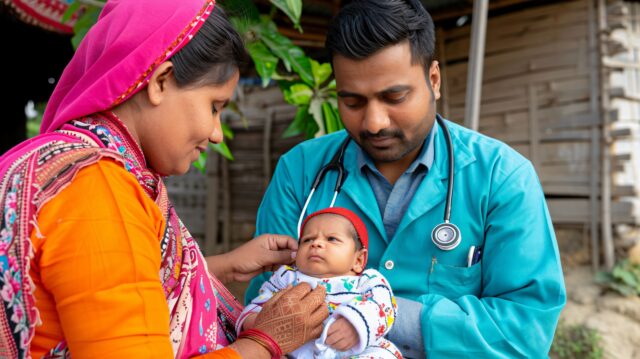
Personalizing IT Solutions for Healthcare Industry Needs
You might wonder: “Can one size fit all?” Not really. That’s why IT solutions for healthcare industry need to be custom-built. Here’s how different rural contexts require different strategies:
| Region | Challenge | Solution |
| Northeast India | Mountainous terrain | Satellite internet & drone supply chains |
| Desert belts | Water scarcity & heat | Solar-powered diagnostic centers |
| Tribal zones | Language barriers | AI-based voice assistants in local dialects |
Tailoring tech for people rather than the other way around is how you ensure success.
What Can You Do to Be Part of the Change?
Now comes your role. Whether you’re a policymaker, healthcare worker, IT developer, or simply a concerned citizen there’s something you can do:
- Advocate for digital literacy in your communities
- Support NGOs deploying it solutions for healthcare
- Fund local healthcare tech initiatives
- Use your skills to create simpler, vernacular-friendly applications
Change doesn’t happen in isolation. And sometimes, it starts with one click, one download, or one conversation.
Conclusion: Reimagining Care, One Bit at a Time
You’ve now seen that Healthcare IT Solutions aren’t a pipe dream. They’re here, they’re working, and they have the potential to revolutionize healthcare access across rural India. All it takes is sustained effort and inclusive design thinking.
If you ever questioned whether technology could really heal, this might be the answer you’ve been looking for.